Projects

Selected research projects spanning galaxy clusters, AGNs, X-ray astrophysics, gravitational lensing and spectroscopy. Each project highlights the scientific question, the methods and data used, and my specific contribution.

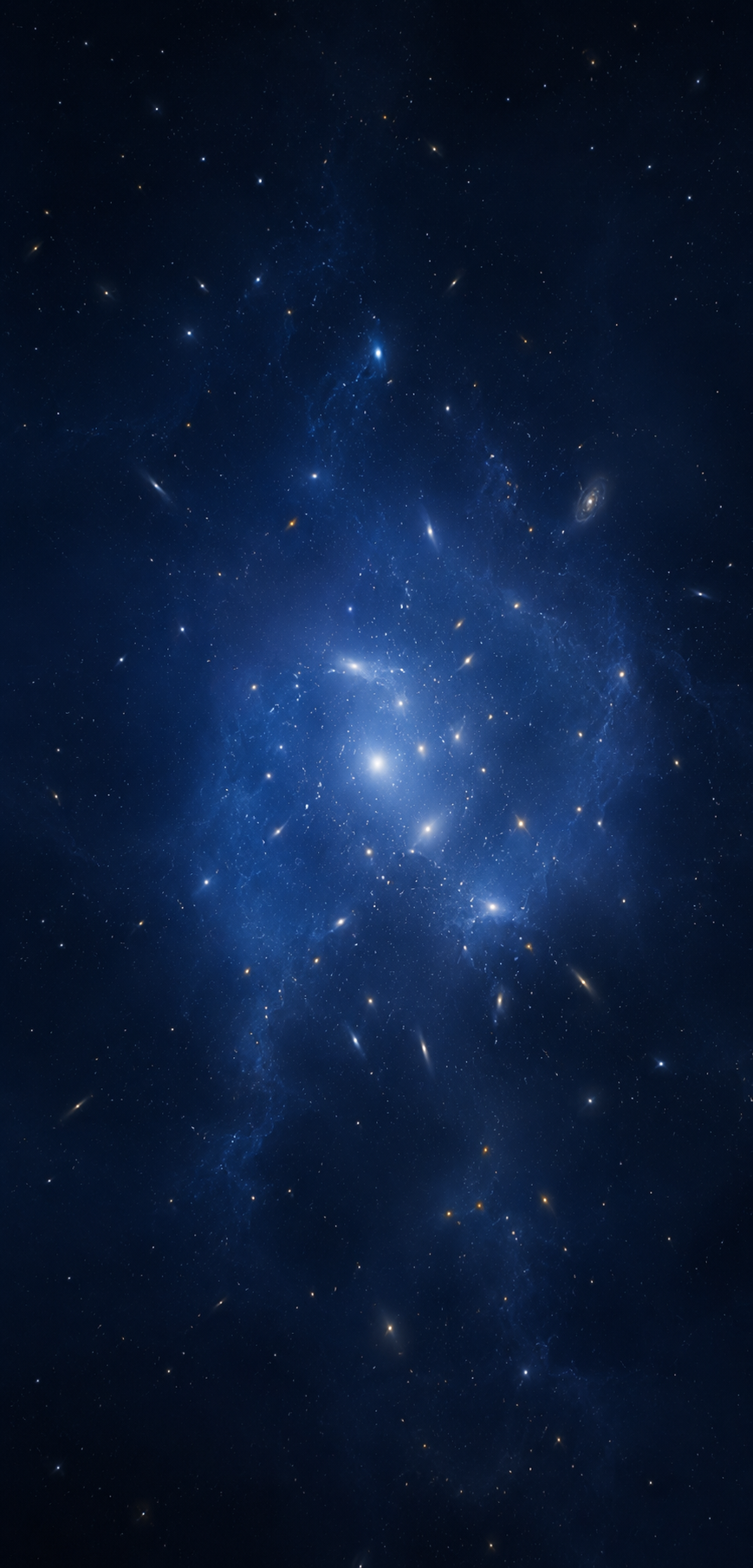
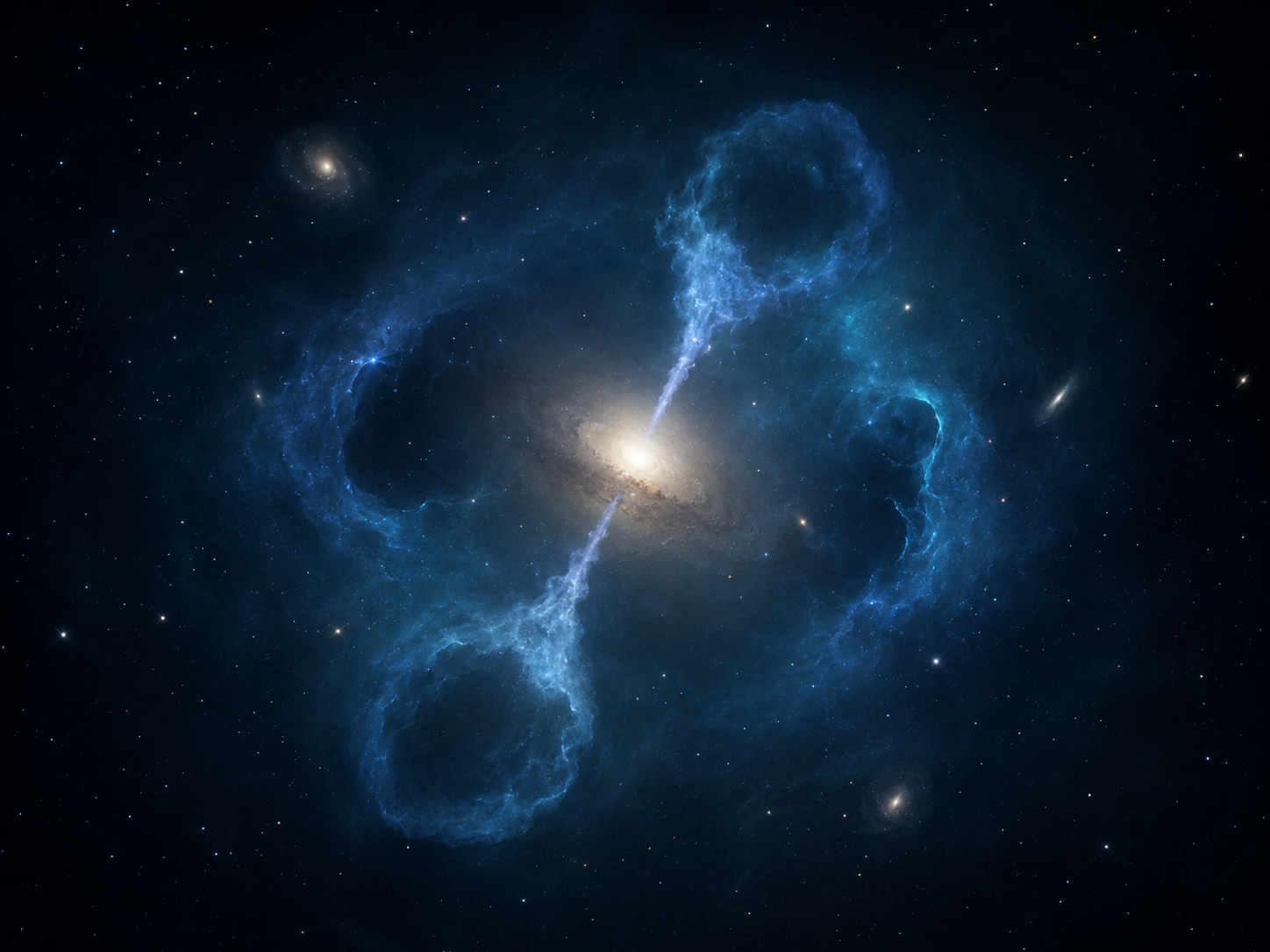
Illustration of AGN feedback in a galaxy group

AGN Feedback in Galaxy Groups

MSc Thesis (09.2026–)

MPE/LMU, Garching/Munich

ONGOING
AGN - Groups - Galaxies - Redshift - eROSITA
X-ray - galaxies - observational
View Documents →

Project Overview:

Under construction.

My Contribution:

Under construction.

Tools Used:

Under construction.

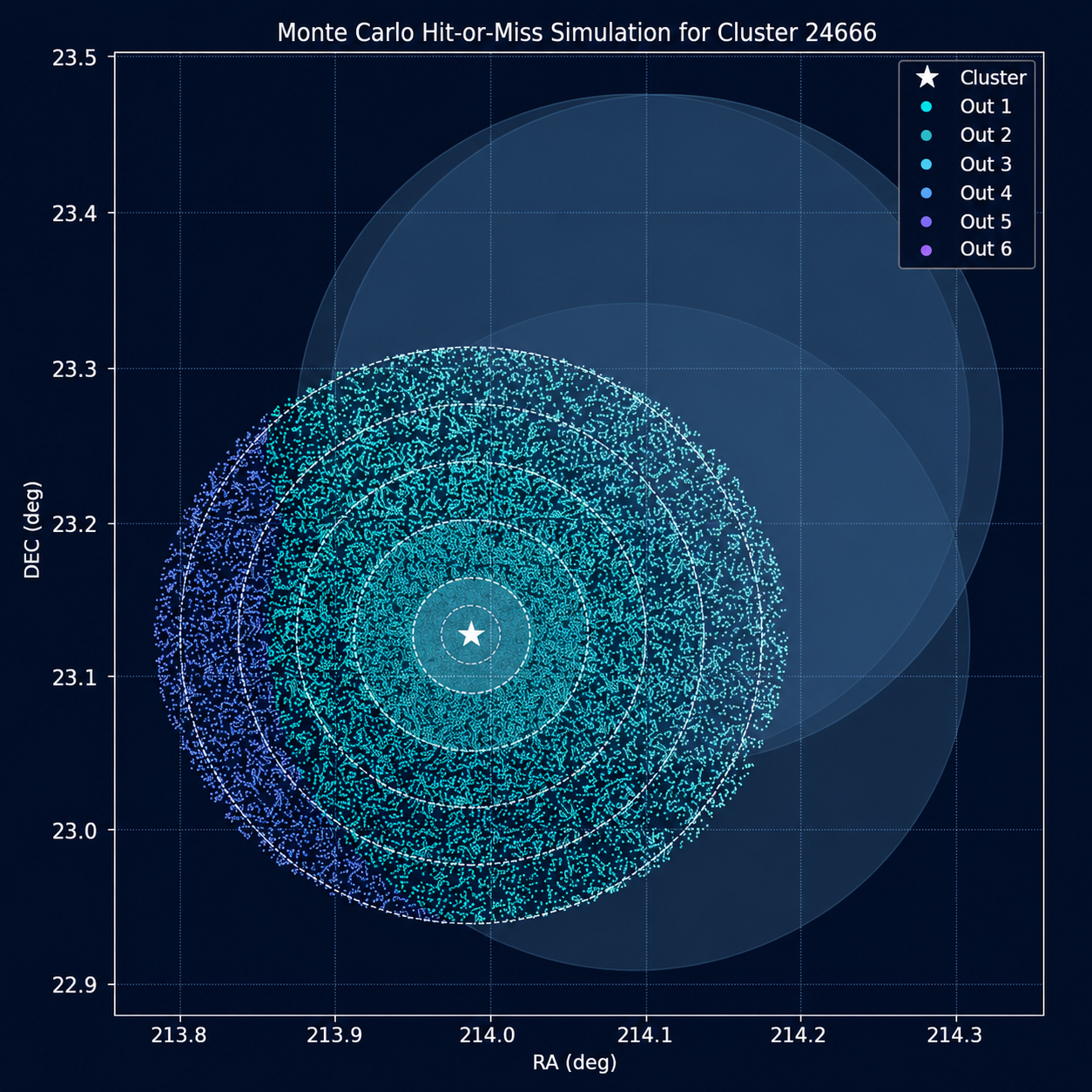
Monte Carlo estimate of observational coverage around a galaxy cluster

Monte Carlo estimate of the effective observational coverage around an example galaxy cluster, used to correct for non-uniform XMM-Newton sensitivity across radial bins.

AGN Population in Galaxy Clusters

Internship (07–08.2025)

BSc Thesis (10.2025–06.2026)

Research Project (10.2026–Ongoing)

IAASARS, NOA, Athens

ONGOING
AGN - Clusters - Galaxies - Redshift - XCLASS
eROSITA - XMM-Newton - X-Ray - SDSS - optical
WHL12 - galaxies - observational

Project Overview:

This project investigates the population of active galactic nuclei in galaxy clusters and how AGN activity depends on cluster environment, mass, redshift, and cluster-centric distance. I compare cluster samples from the eROSITA all-sky survey and the XCLASS XMM-Newton catalogue, using X-ray source counts together with optical galaxy information. The project also studies the importance of survey selection, such as energy range and homogeneity.

My Contribution:

I developed Python-based analysis pipelines to construct cluster and source samples, apply luminosity and sensitivity cuts, estimate background source counts, account for incomplete observational coverage, and calculate AGN excesses in radial bins scaled by R500. I also compared trends across cluster mass and redshift ranges. In addition, I investigated the XCLASS sensitivity maps and developed Monte Carlo methods to correct for non-uniform observational coverage. Finally, I physically interpreted the resulting trends and connected them to the current picture of cosmic evolution.

Tools Used:

Python (Astropy, NumPy, Pandas, Matplotlib) — catalogue processing, numerical analysis, cosmological calculations, statistical comparisons, and visualization.

TOPCAT — inspection, filtering, cross-matching, and validation of large astronomical catalogues.

SDSS CasJobs / SQL Queries — retrieval of optical galaxy data from the SDSS database using custom SQL queries.

SAOImage DS9 — visualization and inspection of X-ray observations, source positions, cluster regions, flux limits, and sensitivity-related products.

Monte Carlo numerical algorithms — estimation of effective observational coverage and correction for non-uniform XMM-Newton sensitivity across cluster regions.

XCLASS sensitivity maps — evaluation of spatial variations in source-detection sensitivity and determination of usable survey area.

Catalogue cross-matching — association of cluster, X-ray source, and optical galaxy catalogues using positional and physical selection criteria.

Statistical analysis — calculation of AGN excesses, uncertainties, radial profiles, and comparisons across cluster-centric distance, mass, and redshift bins.

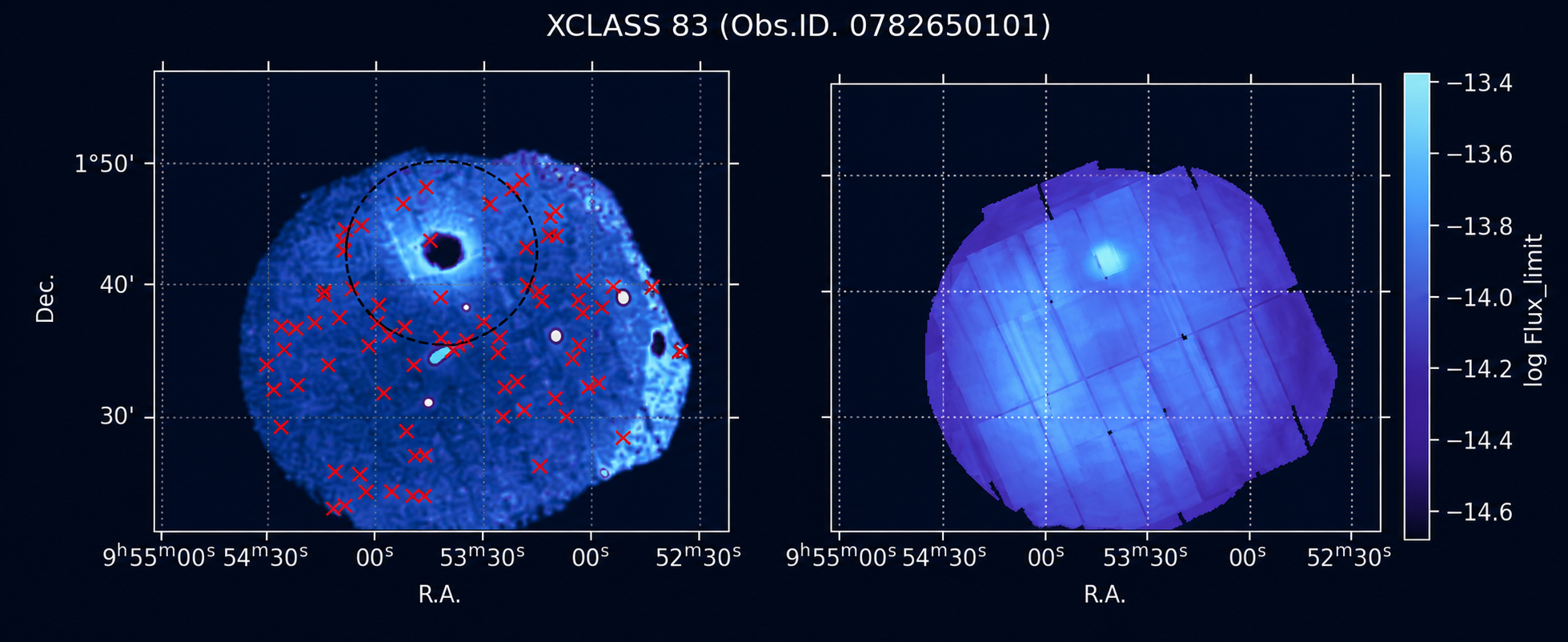
Example XCLASS field and corresponding XMM-Newton sensitivity map

Example XCLASS field and corresponding XMM-Newton sensitivity map.

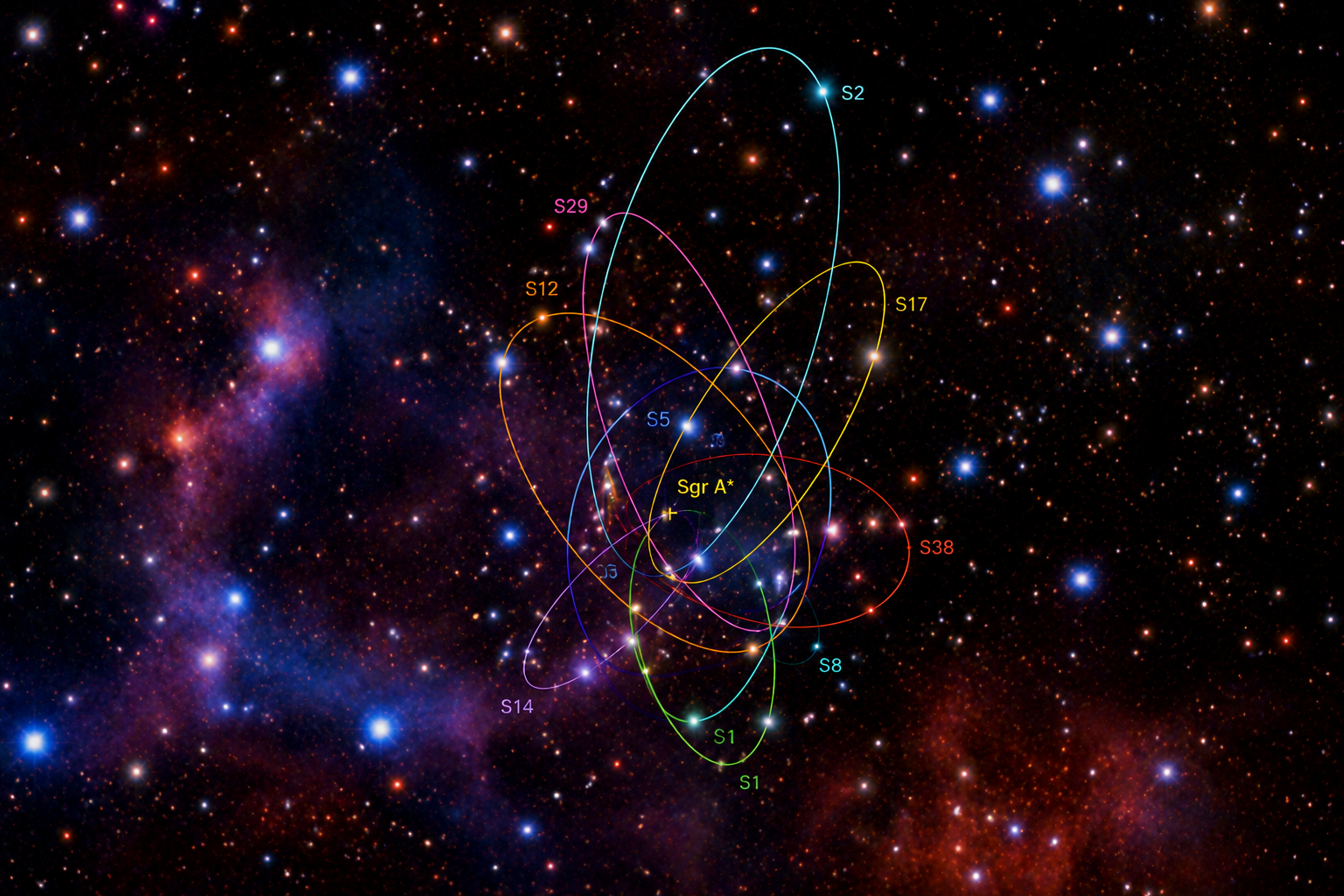
Stellar orbits around Sagittarius A* at the Galactic Centre

Spectroscopic Study of the S2 Star

Astrophysics Lab, Group Project (11.2025–02.2026)

NKUA, Athens

COMPLETED
S2 Star - Galactic Centre - Spectroscopy
Orbital Dynamics - Black Holes

Description:

We studied the S2 star orbiting the supermassive black hole at the Galactic Centre, using its projected orbit and radial-velocity evolution to infer key orbital parameters and estimate the central black-hole mass. The project combined Keplerian orbital dynamics, coordinate transformations, numerical modelling, and the interpretation of near-infrared spectroscopic measurements.

As part of the group, I contributed to the theoretical derivation and numerical analysis of the projected orbit and radial velocity, as well as to the reconstruction of quantities such as eccentricity, inclination, semi-major axis, and central mass.

By combining characteristic features of the radial-velocity curve with the projected orbital geometry, we constrained the parameters of the S2 orbit and examined how Doppler shifts and near-infrared spectroscopy are used observationally to trace the motion of S stars. The method recovered orbital parameters close to their expected values and yielded a Galactic Centre black-hole mass of approximately 4.15×10⁶ M☉, demonstrating how spectroscopic and astrometric information can be combined to infer the physical properties of the S2–black-hole system.

Our project included a written report as well as an oral presentation.
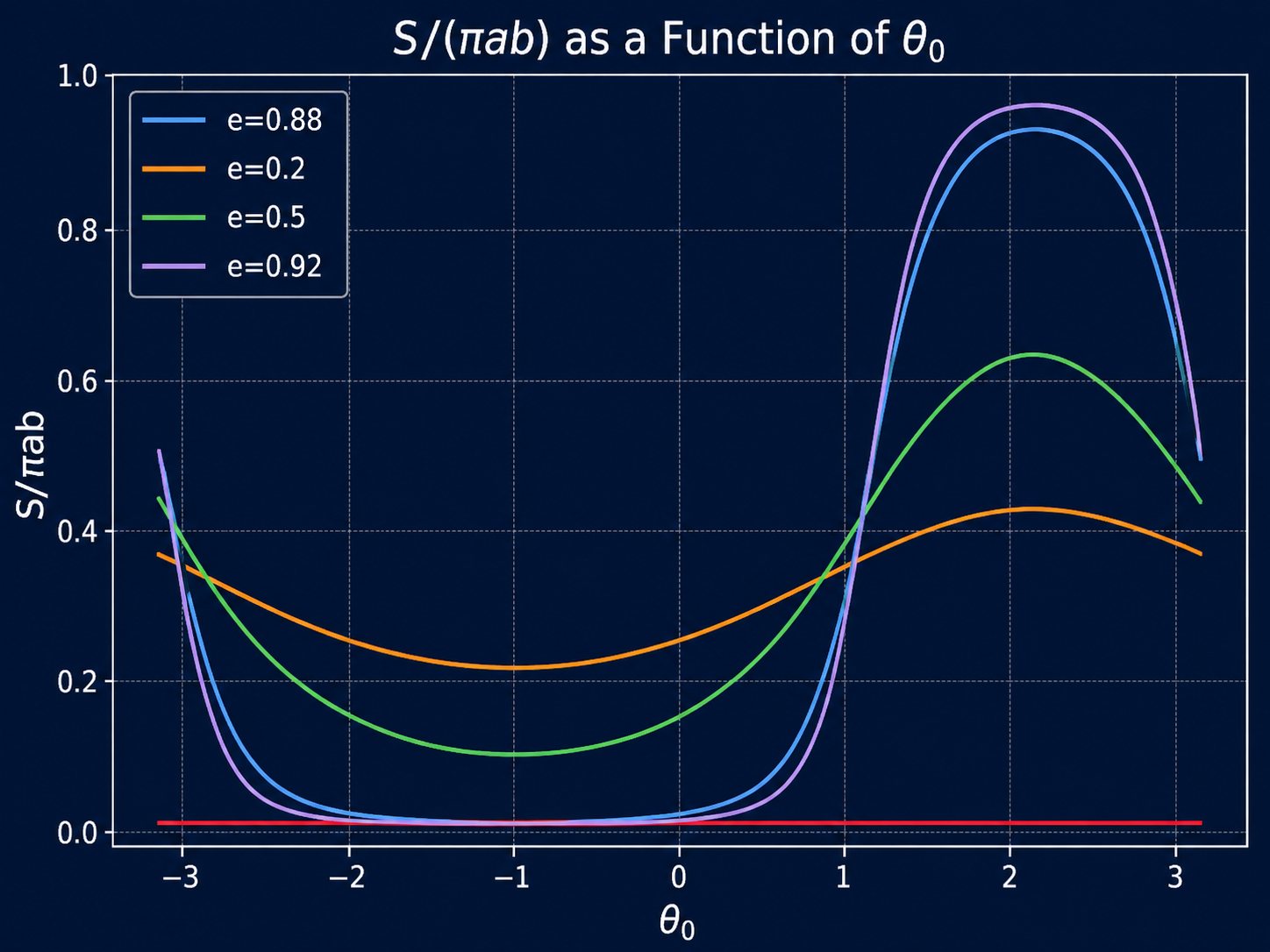
Normalized swept orbital area as a function of orbital angle for different eccentricities

Normalized swept orbital area, S/(πab), as a function of the orbital angle θ for different eccentricities. The measured time interval provides the constraint used to narrow down the allowed orbital parameters of S2.
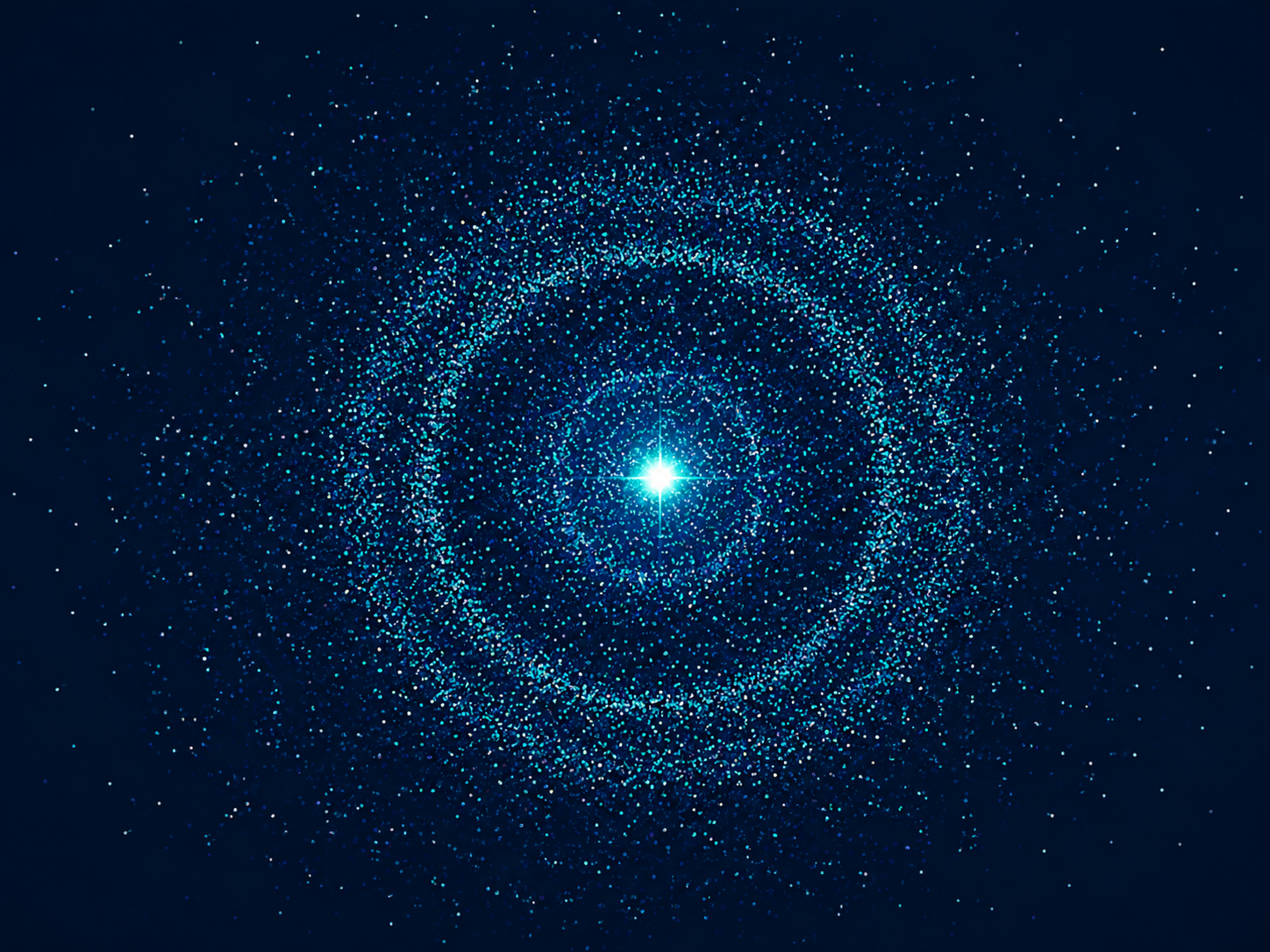
Conceptual visualization of gravitational lensing and scattering time delays

Time Delays Induced by Gravitational Lensing and Dust Scattering

Research Project (10.2023–02.2024)

NKUA, Athens

COMPLETED
Gravitational Lensing - X-ray - Scattering
GRBs - Cosmology - Python

Description:

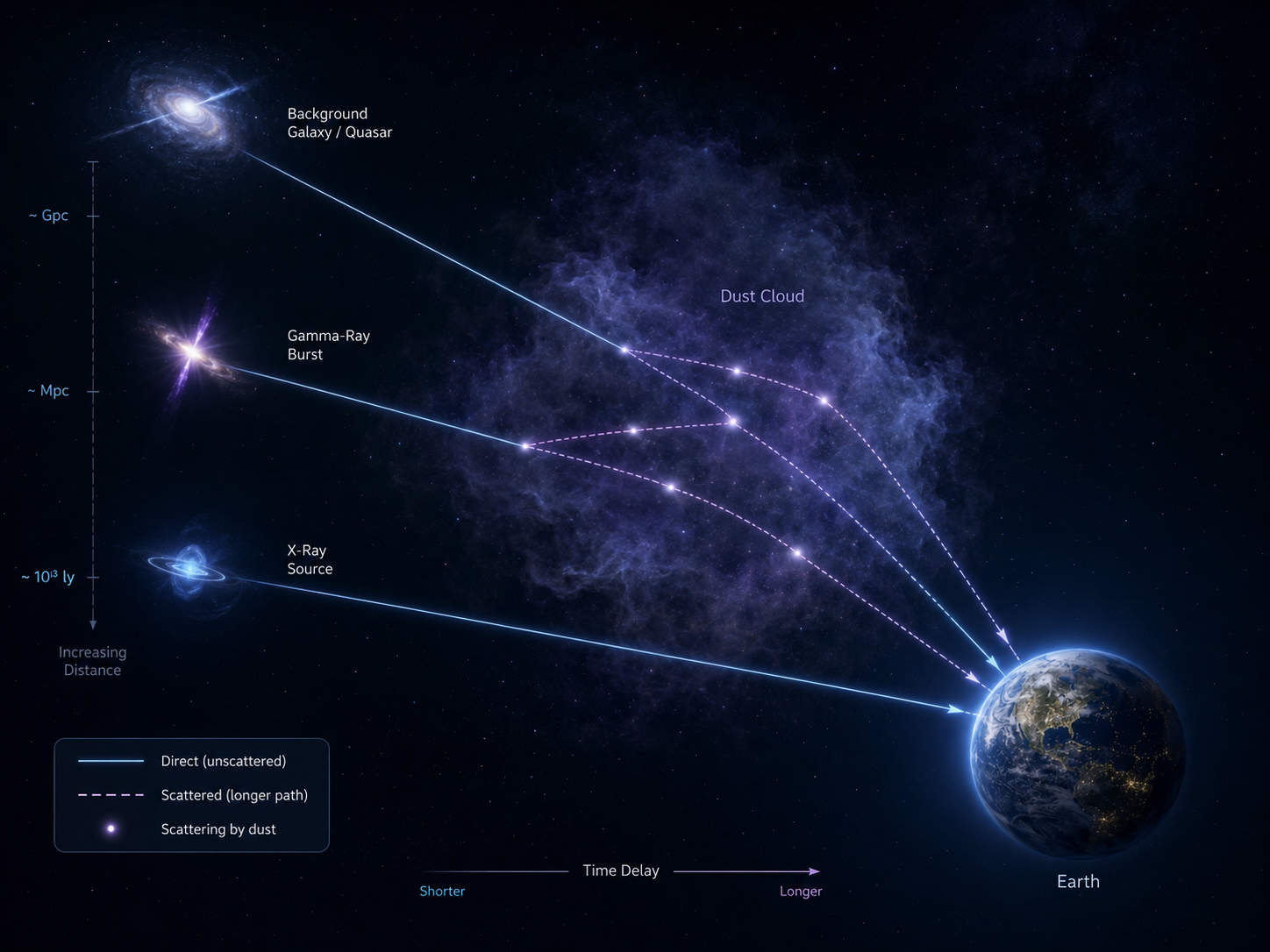
I investigated time delays between photons following different paths due to two astrophysical mechanisms: gravitational deflection by a point-mass lens and small-angle X-ray scattering by dust.

The project compared the mathematical treatment of the two phenomena and explored how their geometries, cosmological distances, and deflection angles determine the resulting arrival-time differences. I analytically derived the relevant time-delay relations and connected the gravitational-lensing and dust-scattering formulations through cosmological distance measures.

I then used numerical calculations in Python to evaluate representative configurations involving Galactic and extragalactic X-ray sources and dust distributions.

The analysis showed that the expected delay depends strongly on the relative positions of the source, scattering material, and observer. The examples considered ranged from delays of minutes for Galactic configurations, to milliseconds for distant sources scattered by nearby Galactic dust, and up to hundreds of years when both the source and dust were extragalactic.

Conceptual photon paths produced by gravitational lensing and dust scattering

Conceptual illustration of photon paths altered by gravitational lensing and scattering, highlighting how different trajectories can produce measurable arrival-time delays.